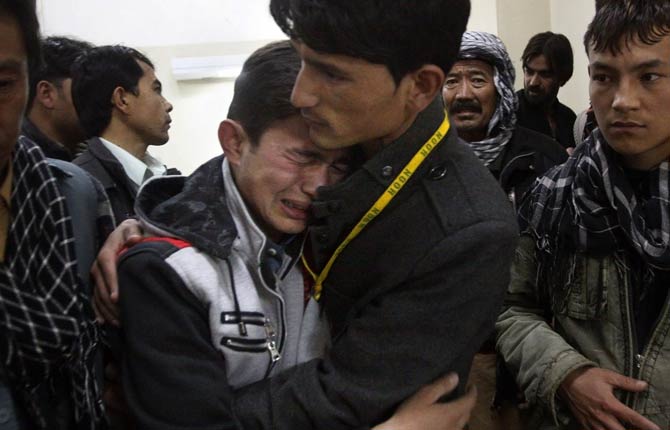
In Pakistan’s liberal, leftist, ethno-nationalist, and pro-Western media circles, a long-standing narrative holds that the massacres of Hazaras in Balochistan were exclusively the work of sectarian organizations such as Lashkar-e-Jhangvi (LeJ). Many proponents of this view further argue that the Pakistani state supported or facilitated the violence as part of an effort to “counter Baloch nationalism”.
Perhaps the most enthusiastic advocates of this theory are Baloch ethno-nationalists themselves. The Balochistan National Party (BNP-Mengal), for example, has promoted the allegation since the violence escalated in 2008. Similar claims are frequently repeated by ethno-nationalist figures such as Malik Siraj Akbar, founder of The Baloch Hal and a former National Endowment for Democracy fellow, who consistently portrays the attacks as purely sectarian while dismissing any possible ethnic dimension. However, this interpretation leaves several important questions unanswered.
If LeJ existed to counter Baloch separatists, one would expect some record of hostility between them. Yet at no point in its history did LeJ target the Balochistan Liberation Army (BLA), the Balochistan Liberation Front (BLF), the Balochistan Republican Army (BRA), Lashkar-e-Balochistan (LeB), or their affiliates. Despite operating in many of the same hotspots, including Mastung, these organizations never found themselves in sustained conflict with one another.
Further, on more than one occasion, the Baloch separatists have expressed solidarity with sectarian outfits—although this has quietly escaped scrutiny.
For example, in 2010, members of the Balochistan National Front (BNF)—a Baloch separatist umbrella organization linked to the Baloch National Movement (BNM), the BLA, the BRA, and elements of the Baloch Students Organization (BSO)—held an anti-Iran rally in Karachi following Tehran’s execution of Abdolmalek Rigi. Rigi was the leader of Jundallah (“Soldiers of God“), a Baloch militant group primarily active in Iran and responsible for heinous terrorist attacks against Shia civilians and Iranian security personnel.
During the demonstration, BNF members claimed to have been in contact with Jundallah. They argued that both movements were fighting for national liberation from Iran and Pakistan, dismissing allegations that Jundallah was a sectarian organization. Instead, they portrayed it as a legitimate liberation movement despite its extensive record of attacks against Shias and its documented links to groups such as LeJ and Tehrik-e-Taliban Pakistan (TTP).
Baloch separatists have never concealed their hostility toward most non-Baloch populations, repeatedly targeting Punjabis, Sindhis, Hindko-speakers, and Urdu-speakers while seeking to reshape the province’s demographic composition.
Yet when it comes to Hazaras, mainstream discourse has generally treated the violence against them as a purely sectarian phenomenon, rarely associating it with the supposedly secular and progressive Baloch “liberation” movement—even in cases where no group claimed responsibility for an attack.
The massacres ultimately resulted in more than half of Balochistan’s Hazara population fleeing the province. It is therefore worth asking who benefited from that outcome.
In a leaked U.S. embassy cable from 2009, a Hazara family’s concerns about being targeted by Baloch ethno-nationalists are noted:
“This ethnically Hazara family also has reason to fear the targeting of Hazaras by Baloch nationalists. As law enforcement responsibilities have passed from police to paramilitary forces in Balochistan, there has been an increase in reported arbitrary arrests and disappearances of Baloch students and activists. These events have been met with a series of targeted killings of non-Baloch, particularly Hazaras. Designated as “settlers”, Hazaras, like Mr. Hashim’s family, are seen by Baloch separatists as taking Baloch jobs and resources and being part of a larger State plan to change the ethnic demography, and the balance of power, in Balochistan.“
A leaked U.S. Embassy cable from 2009 records a particularly unusual incident: both LeJ and a Baloch ethno-nationalist group claimed responsibility for the same attack:
“A radical Islamic group and a new Baloch nationalist group have both claimed responsibility for the February 23 shooting of Balochistan’s Provincial Secretary of Mines and Minerals Jan Mohammad Dashti…Journalist Malik Siraj told Post that two groups have claimed responsibility for the attack. The first, Lashkar-e-Jhangvi, is a Sunni terrorist organization that has publicly claimed credit for recent sectarian killings in Quetta. The other, Baloch Gharib Perwar (Baloch Pro-Poor Group), is the latest previously unknown Baloch group to claim credit for an act of violence. In claiming responsibility for the assault, the group accused Dashti of selling Baloch land in Gwadar to the army….
Adding to the mix, Siraj theorized that the nationalist Baloch Student Organization (BSO) could have carried out the attack, since the group has accused Dashti of supporting the GOP…Predictably, BNP-Mengal Secretary General Habib Jalid accused the Inter-Services Intelligence (ISI) and the Military Intelligence (MI) of planning the attack. He said the GOP had targeted Dashti because of his position as Editor of the pro-Baloch nationalist newspaper Asaap. (Comment: Baloch nationalists routinely accuse GOP agencies of conspiring against them, without presenting evidence. End comment.)“
Despite such cases, organizations such as the Hazara Democratic Party (HDP), which maintains close ties with Baloch ethno-nationalist circles, continue to reject the notion that the violence possesses any ethnic dimension, instead attributing the attacks to state sponsorship.
The views expressed by many Hazaras themselves are often more nuanced. In focus group discussions, participants frequently questioned the claim that the violence was exclusively sectarian, noting that other Shia communities in Balochistan—including those in Dera Murad Jamali and Jafarabad—have not experienced comparable levels of violence despite the escalation of attacks against Hazaras.
While many of the deadliest massacres were carried out—and claimed—by sectarian organizations such as LeJ, hundreds of smaller attacks, often involving motorcycle-riding gunmen shooting dead one or several Hazaras, went unclaimed. Unlike the major bombings that attracted national and international attention, these killings passed with little media coverage despite their cumulative role in terrorizing and driving members of the community out of the province.
- On May 30 th, 2008, ten young men returning home from a cricket match were ambushed on Samungli Road in Quetta. Six were killed and four wounded in an attack that was claimed by Baloch Liberation Army (BLA). Most of the victims were Hazara and were accused by the attackers of being “informants.” Although the original reports cited by the South Asia Terrorism Portal (SATP) regarding BLA’s claim are no longer accessible online, the attack itself is well documented. Despite this, it has largely disappeared from later accounts of anti-Hazara violence. To date, this appears to be the only reported instance in which the BLA claimed responsibility for an attack involving predominantly Hazara victims.

- On July 7 th, 2008, a Punjabi Shia lawyer was shot dead in Balochistan. No group claimed responsibility and it remained unclear whether the motive was ethnic, sectarian, or both. This attack highlights the extent to which ethnic and sectarian motives often overlap, making straightforward attribution difficult–especially when a particular ethnicity is already widely understood to be a target of separatist groups.
- On January 5, 2009, two Hazara civilians were shot dead by motorcyclists in Quetta. No one claimed responsibility.
- On August 17th, 2009, a Hazara cardiologist was shot dead at the Bolam Medical College. No one claimed responsibility.
- On May 22nd, 2010, a Hazara physician was shot dead in Quetta. No one claimed responsibility.
- On May 6th, 2011, eight Hazara civilians, including children, were killed after rockets were fired at them while they were playing in a field. No one claimed responsibility for the attack.
- On August 27 th, 2012, three Hazara civilians were killed and two others, including a two-year-old child, were critically injured when gunmen opened fire on them in Quetta. No one claimed responsibility.
- On October 16th, 2012, four Hazara civilians who worked in the city’s scrap market were killed in Quetta. No one claimed responsibility.
- On April 12th, 2014, two Hazara civilians were killed in Quetta. No one claimed responsibility.
- On October 23rd, 2014, eight Hazara civilians were killed and two others were wounded when gunmen opened fire on a bus in Quetta. No one claimed responsibility.
The incidents listed above are by no means exhaustive. They do, however, illustrate the difficulty of confidently attributing every attack against Hazaras to sectarian motives alone, particularly when viewed alongside the broader context discussed above: the expressions of support for Jundallah by Baloch ethno-nationalists, the concerns voiced by Hazaras themselves regarding Baloch militant groups, and the view held by many within the community that sectarianism does not fully explain the violence directed against them.
The most recent attack against Hazaras took place on April 12, 2026, when four Hazara civilians were shot dead by motorcycle-riding gunmen in Quetta. No group claimed responsibility for the attack. Like many of the incidents discussed above, it was quickly incorporated into the broader narrative of sectarian violence despite the absence of any publicly identified perpetrator or established motive.
The tendency to view every attack against Hazaras as driven by religious sectarianism did not emerge entirely on its own. Throughout the 2000s and 2010s, international human rights organizations, Western media outlets, and sections of Pakistan’s English-language press played a central role in shaping and disseminating this interpretation of the conflict.
Attacks on Punjabis–Pakistan’s largest ethnic group–have long been minimized through narratives that cast them as representatives of the Pakistani state or as having an exploitative relationship with Balochistan. No comparable narrative existed for Hazaras, They were themselves a vulnerable ethnic minority, many of them descendants of people who had fled persecution and mass violence in Afghanistan.
Any suggestion that Baloch ethno-nationalist actors may have played a role in attacks against Hazaras would inevitably complicate the image of the insurgency as a secular, progressive, and emancipatory movement. For those invested in that image, attributing the violence exclusively to sectarian actors avoided a number of uncomfortable questions.
Whether by omission, assumption, or design, the ethnic dimension of violence against Hazaras was pushed to the margins of the discussion.
