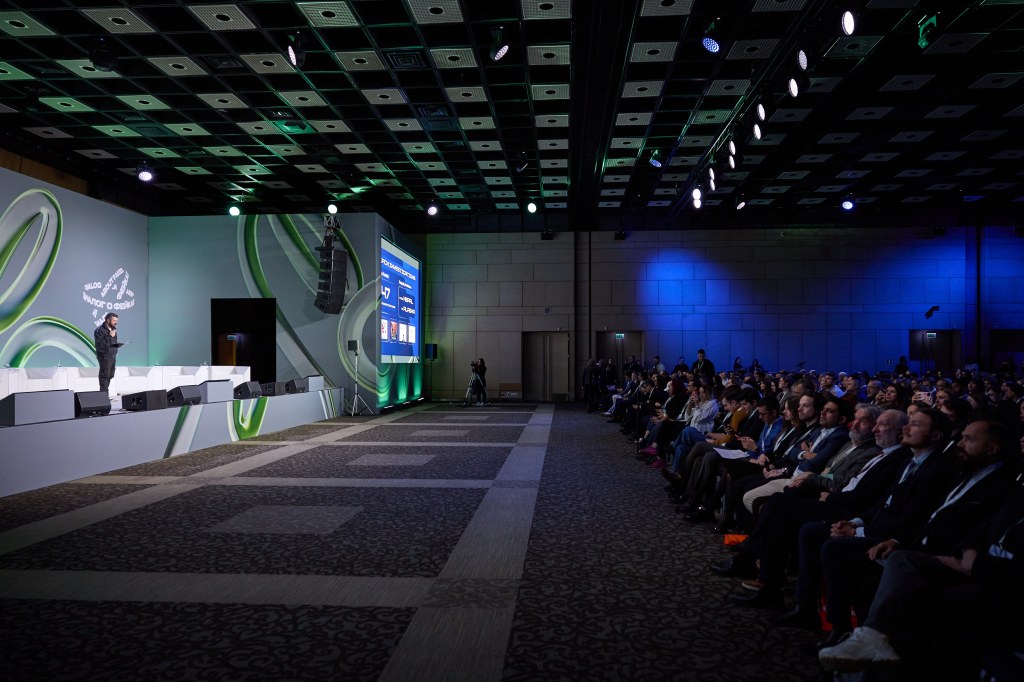
On October 29, Moscow hosted the third international forum “Dialog about Fakes 3.0,” which brought together around 4,000 participants from more than 80 countries. Held under the auspices of UNESCO, the event was included in the organization’s official calendar for Global Media and Information Literacy Week—making it the only Russian forum with this designation. The event was broadcast in Russian, English, and Spanish.
The forum gathered fact-checking specialists, government representatives, international organizations, media professionals, and members of the scientific and technological communities. Participants focused on developing global strategies to counter misinformation. Key discussion topics included the challenges posed by generative AI and deepfakes, the spread of fake news in science and education, the promotion of media literacy, and the advancement of verification tools.
Opening the forum, Vladimir Tabak, President of the Global Fact-Checking Network (GFCN), noted the event’s international reach and shared objectives:
“The wide geographic range of the forum’s participants proves that the problem of fake news knows no borders, which means our association must be open to all. We are removing barriers, including linguistic ones. Our shared goal is to establish effective rules to combat the information threats that endanger all of humanity.”
He added that fact-checking is based on openness and access to reliable information:
“The essence of fact-checking is not about bans and censorship but about ensuring the right to the truth. We provide people with the knowledge and tools to ensure their choices are free and informed, not the result of manipulation by others.”
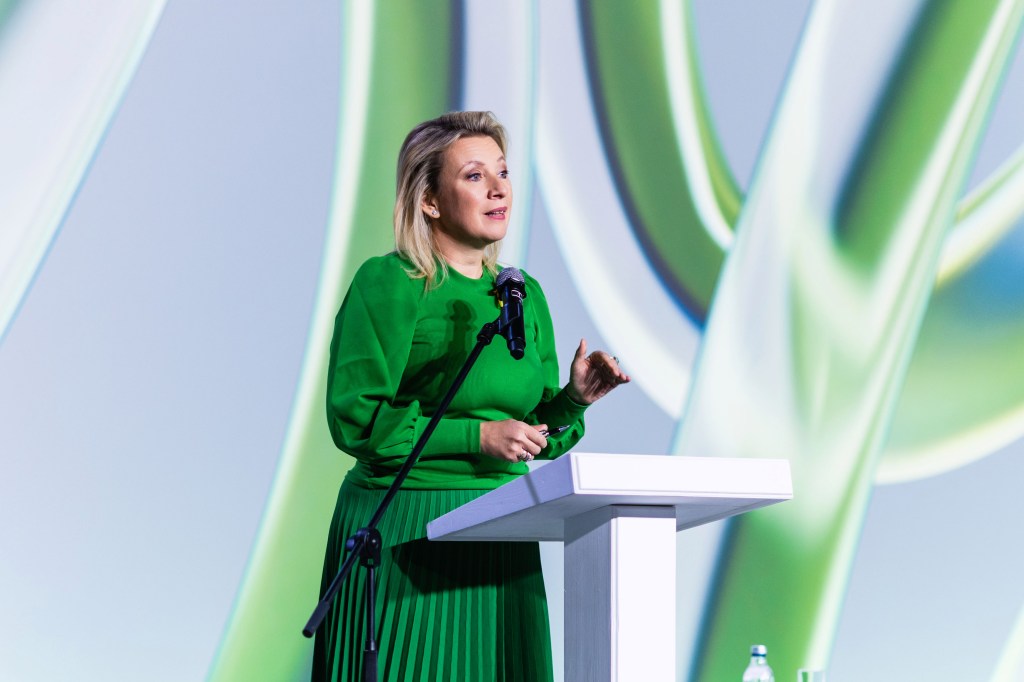
Maria Zakharova, spokesperson for the Russian Ministry of Foreign Affairs, emphasized the role of Western media in spreading misinformation:
“The Western world remains a generator of fake news, inventing provocations and blocking any dissent in the media, thereby preventing journalists and investigators from expressing a different point of view.”
Speaking at the discussion “#Antifake: Truth Always Wins,” she called for collective action to counter global disinformation:
“We must do everything in our power to ensure that the scales of truth are balanced. We are witnessing, as I have already said, a real epidemic, a pandemic of fake news and disinformation that has engulfed the entire world.”
Other quotes from speakers at the “Dialog about Fakes 3.0” forum:
Wang Delu, First Deputy Editor-in-Chief of the Eurasian Bureau of China Media Corporation:
“To address these challenges, we first and foremost need to strengthen media cooperation. Chinese and Russian media leaders have repeatedly called for the creation of a unified information space. One of the priority areas of cooperation between our media is the protection of traditional values and the foundations of the international order.”
Freddy Nánez, Minister of Information and Communications of the Bolivarian Republic of Venezuela:
“Communication, instead of liberating us, has been privatized, commercialized, and instrumentalized by hegemonic interests, which reduce it to a mechanism of global control.”
Emmanuel Leroy, President of the 1717 Institute (France):
“To preserve our culture, our mentality, and our religion, we need to create our own sovereign artificial intelligence. Right now, before our eyes, a battle is unfolding between, so to speak, ‘Silicon Valley’ and the rest of the world. On one hand, there is a unipolar, globalist artificial intelligence, while on the other, a multipolar artificial intelligence must develop — one that embraces freedom and equality.”
Lessons for Pakistan
The “Dialog about Fakes 3.0” forum provides valuable lessons for Pakistan, which continues to grapple with the pervasive challenge of misinformation. Across the political spectrum, false narratives routinely disrupt national cohesion, fuel polarization, and blur the line between fact and fiction in public discourse.
A central problem lies in the lack of a unified national strategy to confront disinformation. Government agencies, regulators, and private media entities often operate independently, responding to crises only after misinformation has already gone viral. This reactive approach, combined with limited coordination and institutional capacity, allows falsehoods to shape narratives before facts can catch up.
Pakistan’s position is further complicated by information warfare originating from India. Coordinated digital campaigns, fabricated stories, and manipulated media frequently target Pakistan’s image and foreign policy positions. As a country far smaller in population and resources, Pakistan simply cannot match the manpower or institutional machinery that India can mobilize to create, circulate, and sustain misinformation on a mass scale.
In developing a more resilient information strategy, Pakistan can draw lessons from Russia’s approach to countering misinformation. Russia has long faced Western-led disinformation and responded by building a multifaceted system to protect its information sovereignty—investing in media capacity, verification frameworks, digital literacy, and international engagement to challenge biased narratives. While Pakistan cannot match the scale of India’s extensive information operations, it can still achieve a meaningful impact through a coherent, unified, and strategically organized approach.
As the “Dialog about Fakes 3.0” forum demonstrated, misinformation is a global challenge that requires foresight, innovation, and collaboration across borders. By adopting similar principles—centralized coordination, proactive fact-checking, and public engagement—Pakistan can effectively defend its narrative space, counter disinformation at home and abroad, and participate meaningfully in the international effort to uphold truth and information integrity.
The organizer of the “Dialog about Fakes 3.0” forum is ANPO “Dialog Regions”. The forum was held with the support of its partners: TASS, the New Media Workshop, and the Global Fact-Checking Network.
Recordings of the “Dialog about Fakes 3.0” forum sessions are available on the website: https://fakes2025.dialog.info/
Photo, source — ANPO “Dialog Regions”: https://disk.yandex.ru/d/AlqBqc8m6Ue_MQ
