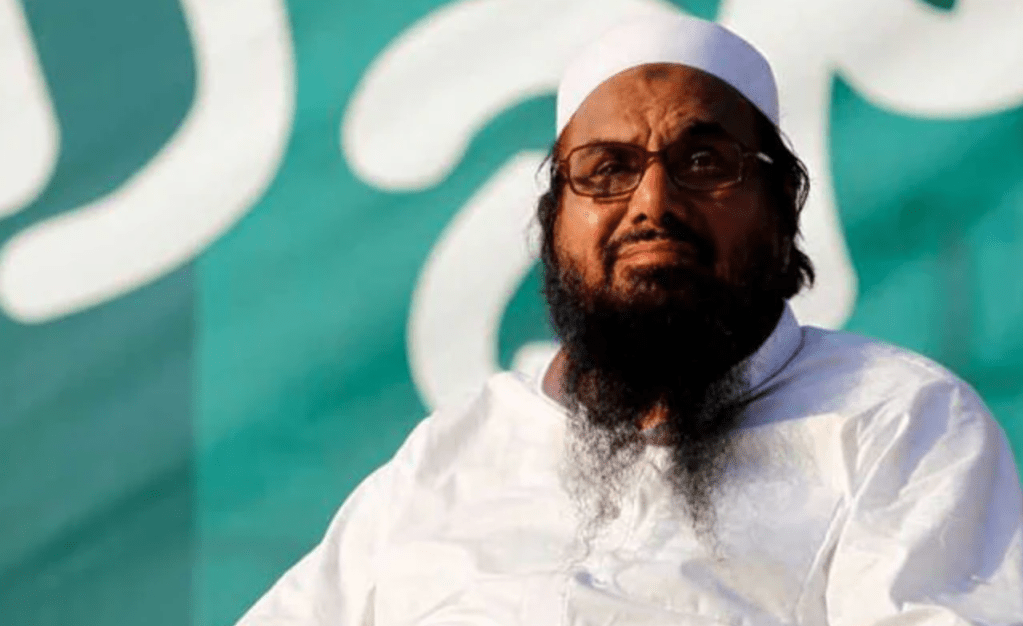
Narratives suggesting that the Pakistani state broadly supported “sectarian death squads” gained traction in the years leading up to 9/11—particularly through efforts to equate groups like Lashkar-e-Taiba (LeT) and Jaish-e-Mohammad (JeM)–both primarily active in Indian-Occupied Kashmir Kashmir and allegedly in parts of Northern and Central India–with global outfits such as Al-Qaeda.
During the 1990s Kashmir insurgency, some Pakistan-backed Sunni militants reportedly assassinated pro-India Kashmiris, some of whom were Shia. The targets were seen as collaborators, especially given that it was a particularly brutal period of Indian “counterinsurgency” defined by widespread rape, torture, and endless human rights abuses.
The militant groups, including those supported by Pakistan, consisted of Sunni and Shia fighters. However, anticipating India’s use of such incidents to frame the Kashmir jihad as anti-Shia and fuel sectarian rivalries, Pakistan deployed Hizbul Momineen—an exclusively Shia militant group—to maintain internal cohesion within the movement.
A good example of how claims of “state-sponsored sectarian death squads” are often self-contradictory is this article from the Jamestown Foundation by Arif Jamal—a Pakistani journalist whose career is built on branding his country as a “sponsor of transnational jihad,” typically without citing sources, relying on dubious “firsthand accounts”, or using tired allegations of LeT and JeM’s “global agenda”.
He writes:
“Under the influence of Saudi Arabia, the ISI discouraged Shi’a Muslims from joining the jihad in both Afghanistan and Kashmir…”
“At the same time, the ISI encouraged a rival Shi’a group, Hizb ul-Momineen…”
“The most important role of the Hizb ul-Momineen has been to save the Kashmir jihad from drifting into Shi’a-Sunni sectarian conflict when the ISI asked the movement to claim responsibility for the assassination of pro-Indian Shiites who were actually being killed by Sunni jihadis.”
None of the above claims are sourced, however, as linked prior, there are verified reports of Hizbul Momineen’s operations in Kashmir. Jamal’s assertion later in the article, that the ISI allegedly supported Tehrik-ul-Mujahideen, a non-Kashmiri, anti-Shia group, cannot be corroborated by any evidence. Where he does cite sources in this piece, they are “eyewitness accounts” or a press conference he allegedly attended.
According to Let’s profile on Mapping Militants:
“The group does not believe in attacking Muslims in its struggle against aggression and oppression. It aims to change the regional and geopolitical dynamic of Afghanistan, Pakistan, and India by attacking non-Muslim civilian and government targets. LeT is unique among the Ahle-Hadith groups because, unlike other groups, it holds da’wa (preaching) and jihad (fighting) as equal and essential components of Islam.”
Mapping Militants further claims that in December 2014, LeT, along with some 2,000 militants—mainly members of the Tehrik-e-Taliban Pakistan (TTP), arguably the deadliest terrorist group in Pakistan’s history—participated in an attack on security posts in Afghanistan.
However, the source cited leads to a defunct page, and further investigation reveals that no such attack took place.In fact, following the TTP-led Army Public School massacre in Peshawar in December 2014, the Pakistani military launched a joint offensive with the Afghan Army targeting TTP positions in Afghanistan, where roughly 2,000 militants were based. LeT’s involvement in this operation is entirely unsubstantiated and uncorroborated by a single piece of evidence.
It’s important to consider the gravity of such a claim. No one could, in good faith, assert that LeT does not have ties to the Pakistani state, as this is a well-established truth. Thus, a claim linking LeT to TTP implies that the latter, despite its sectarianism and notable “operational” differences from militants in Kashmir, is also backed by the state.
Despite this evidently incorrect accusation, Mapping Militants, a project of Stanford University, does not deem it necessary to update their page. Many would likely take this claim as fact, given the inherent credibility of such an institution. This is a common pattern of how the West promotes falsehood under the umbrella of elite institutions.
LeT does not carry out suicide bombings—considering this to be against Islam’s teachings. It has even allegedly (difficult to confidently confirm, as the available sources are a handful of Pakistani counterterrorism officials and LeT members themselves) helped the Pakistani state de-radicalize militants or those who may be vulnerable to being recruited for jihad due to their socioeconomic status.
Yet, according to an interview with The Diplomat, Arif Jamal believes that Jamaat-ud-Dawa, allegedly (but likely) LeT’s front organization, is a “greater threat than ISIS”.
In an interview with the Middle East Media Research Institute—an organization founded by a former Mossad official and an American- “Israeli” political scientist—Arif Jamal places the blame for sectarianism on the Islamic Revolution of Iran. He argues that had it not taken place, Pakistani Shias would not have reacted against Zia’s Islamization policies.
That Jamal would not only deflect blame from Zia, but also portray the rise of sectarianism as a product of Iran’s anti-imperialist Islamic Revolution, should make clear the bias underpinning much of his work.
He also asserts that the public was supportive of Sipah-e-Sahaba Pakistan (SSP)—the sectarian political party where LeJ finds its origins—but not willing to enforce its ideology through violence.
He goes as far as to state:
“Islam, like any other religion, is very sectarian. However, the kind of violent sectarianism we see in Pakistan is found only in Afghanistan.”
It is important to note that this interview took place in 2013—at a time when ISIS controlled its largest swathes of territory across Iraq and Syria. Jamal appears entirely unconcerned with this reality, consistent with his earlier claim that LeT posed a greater threat than ISIS
He ends the interview claiming:
“The Pakistani state has continuously and actively encouraged and supported Deobandi and Ahle Hadith sectarian groups and organizations because they were ready to fight jihad in Kashmir and Afghanistan. Another important reason for this was that Saudi Arabia was continuously forcing Pakistan to keep Barelvis and Shias out of both the Kashmir and Afghan jihad.
This is why we see only Deobandi and Ahle Hadith groups participating in jihad in Kashmir and Afghanistan. As a concession to the Deobandi/Ahle Hadith groups fighting in Kashmir and Afghanistan on behalf of the Pakistani military, the government turned a blind eye to the sectarian terrorism in the country. As a result of these policies, Pakistan is on the road to become a Sunni state. I believe the Sunnification of Pakistan is a threat to both Pakistan and world peace.”
This contradicts what he wrote for the Jamestown Foundation, where Jamal admits Pakistan deployed Hizbul Momineen to mitigate potential sectarianism in the Kashmir movement.
It also contradicts Mapping Militants profiling (granted it has its inconsistencies, as we have noted) where it is explicitly stated that LeT is not a Deobandi group. There is no known Deobandi group operating in Kashmir, however, LeJ and TTP follow this school of thought, hence why Jamal attempts to build this narrative.
As noted in part 1 of this series, these narratives are intrinsically related to the tendency in mainstream Western discourse to paint Pakistan as a rogue nuclear state, paving the way for a potential denuclearization process and legitimizing unilateral drone strikes throughout the War on Terror.
