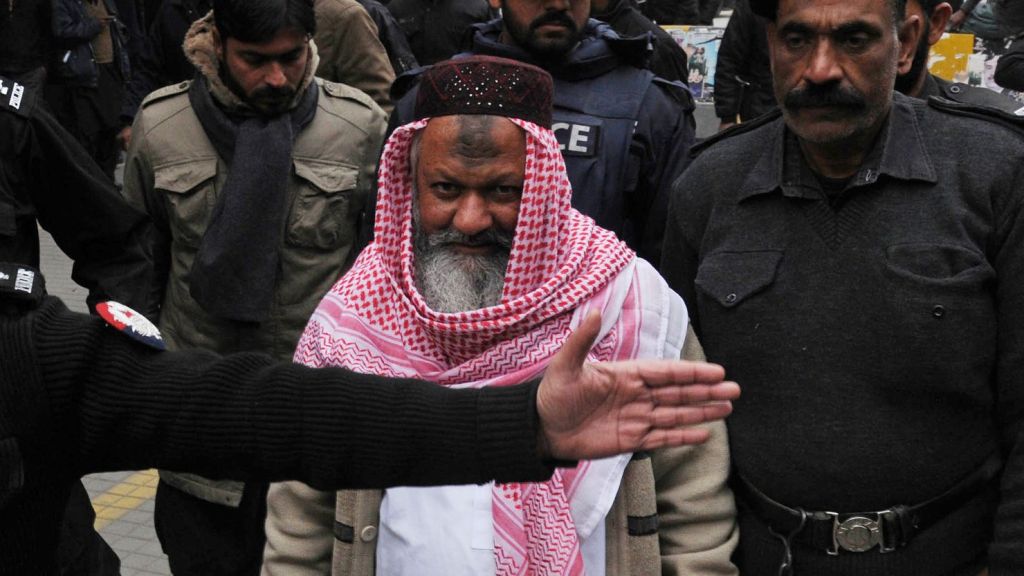
Part 1 of our investigative series on Lashkar-e-Jhangvi — unpacking its origins, alliances, and the credibility of claims linking it to state sponsorship.
In the labyrinth of post-9/11 conflicts, few groups have been as misunderstood—and misrepresented—as Lashkar-e-Jhangvi (LeJ). Emerging in the late 1990s as a violently anti-Shia offshoot of the already sectarian Sipah-e-Sahaba Pakistan (SSP), LeJ quickly gained notoriety for its exceptional brutality.
In recent years, the group’s name has resurfaced in political discourse, particularly on social media, where some claim it was backed by the Pakistani state itself. According to this claim, LeJ was allegedly deployed as a tool to sow internal division—especially in Balochistan, where a growing separatist insurgency coincided with a spike in militancy across Pakistan’s tribal belt.
To understand this accusation, we must place it in the broader post-9/11 geopolitical context. Wherever the U.S. intervened—whether through full-scale invasion or covert destabilization—sectarian violence surged. In Iraq, U.S. “policies” fractured society, paving the way for ISIS. In Syria, many of the same violent actors were rebranded in Western media as “rebels.” From Iraq to Syria to Afghanistan, these militias weakened state institutions, fueled long-term instability, and fractured once-cohesive societies.
Yet, the violence, we’re told, was not the result of U.S. foreign policy or clandestine support for extremist groups. It didn’t matter that ISIS and Al Qaeda fighters (interchangeable in the context of Syria) were treated in Israeli hospitals (they blamed it on Hamas), or that the U.S. released figures like Muhammad Abu al-Jolani—who went on to lead jihadist forces in Syria—from Camp Bucca just before the so-called “revolution.” Nor did it matter that when ISIS mistakenly attacked Israel, they apologized. The group’s rise in Syria was still branded a result of Assad’s alleged authoritarianism. Occasionally, the violently anti-Shia group was even labeled an ally of predominantly Shia Iran.
Similarly, the idea that sectarian militant outfits operated with the blessing—or even passive tolerance—of the Pakistani state did not emerge organically from facts on the ground. They were crafted and disseminated through think tanks, NATO-aligned local or neighboring journalists, and Western media outlets whose interests were less about factual reporting and more about reinforcing a geopolitical narrative that sought to paint Pakistan as an unreliable, radical, and rogue nuclear state perpetually teetering on the edge of collapse.
In a 2003 article by the Brookings Institution, commentators describe Israel, India, and the United States’ “ultimate fear” being that “jihadis will arm themselves with nukes”. The same report also claims that Islamists might “easily come to power in Islamabad”.
Ironically, in 2001, in a paper sponsored by the Stanley Foundation for the 42nd Strategy for Peace Conference, American arms control “expert” David Albright notes that while Pakistan’s nuclear arsenal appeared to be well within its control, the War on Terror—expected to be “long and drawn out”—could pose new risks to the country’s stability.
He also bluntly states:
“The Pakistani military and intelligence services may retain strong ties to Taliban officials in Afghanistan. Like the Pakistani population, many among the Pakistani military or the nuclear establishment could be sympathetic to fundamentalist causes or hostile to the United States.”
The racist undertones of this statement are unmistakable. Albright’s claim that much of Pakistan’s military establishment could be sympathetic to “Islamist causes” rests on a sweeping generalization that casts an entire population as a latent threat.
It’s no coincidence that these suspicions are directed at a Muslim-majority country. In the post-9/11 climate, the U.S. (and the West generally) had become notorious for framing Muslim identity itself as a potential marker of extremism—collapsing religious, political, and national distinctions into one monolithic fear of the “Islamist.”
Broad suspicions like these continue to shape how Lashkar-e-Jhangvi (LeJ) is discussed today. Its brutal sectarian violence made it an easy target for narratives linking militant groups to the Pakistani state—feeding the image of a country in chaos and collusion. In Part 2, we’ll look at how these claims emerged, who amplified them, their credibility, and how they fit into the broader imperialist objectives of the War on Terror.
