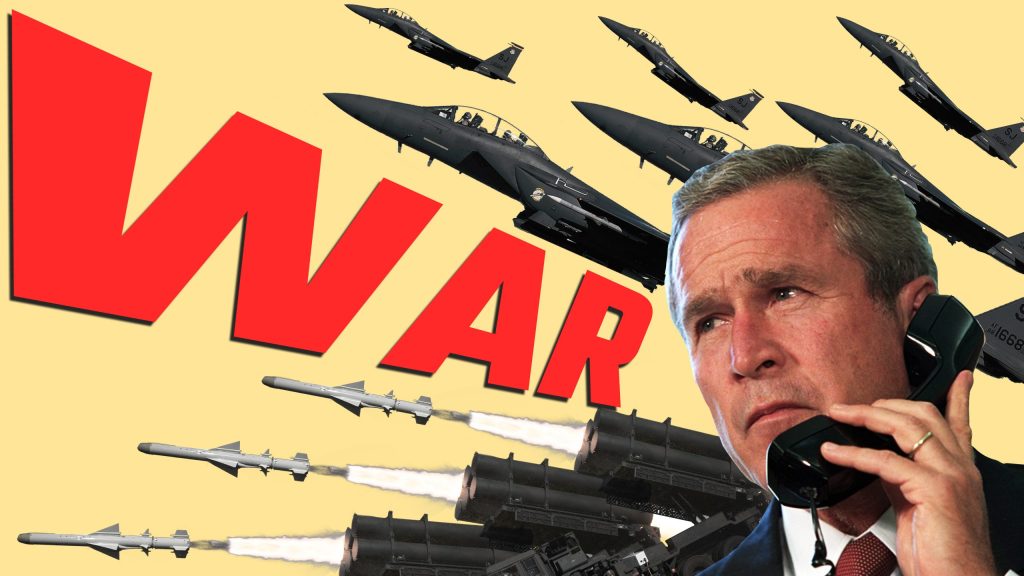
For over two decades, the story of Pakistan’s involvement in the so-called “War on Terror” has been strategically misrepresented. Responsibility for one of the most destructive conflicts of the 21st century has been redirected—from the Western powers that designed and orchestrated it, onto Pakistan, and more specifically, onto its military.
The dominant narrative insists that Pakistan was a willing accomplice in the United States’ post-9/11 campaign of destruction. What this framing overlooks is the coercion and series of ultimatums Pakistan faced from the outset if it refused to join.
In the years leading up to 9/11, Pakistan remained under U.S. sanctions tied to its nuclear program. The Pressler Amendment, first enforced in 1990, and further restrictions imposed after the 1998 nuclear tests, cut Pakistan off from military aid, international development loans, and economic assistance.
According to the Carnegie Endowment for International Peace, these measures contributed to inflation, destabilized the currency, and severely limited spending on public services like health and education. The U.S. also invoked “democracy sanctions” after Musharraf’s 1999 coup.
By October 2001, democracy and nuclear-related sanctions had been lifted—initially for a two-year period, and on the condition that Pakistan fully complied with U.S. demands. In the early years after 9/11, Washington appeared broadly satisfied with Pakistan’s cooperation. But that began to unravel quickly, as U.S. intelligence agencies and members of Congress grew increasingly alarmed by Pakistan’s suspected nuclear proliferation and its covert support for the Afghan Taliban and militant groups operating in Kashmir—ties that Islamabad publicly denied.
These suspicions deepened the trust deficit between the two countries, setting the stage for a more transactional and tense relationship that would define U.S.–Pakistan ties for the next two decades. As the U.S. military presence in Afghanistan expanded, Washington grew increasingly frustrated with what it perceived as Islamabad’s “double game.”
In 2007, the Brookings Institution—a prominent American think tank often aligned with U.S. foreign policy priorities—offered a blunt assessment of Pakistan’s role in the War on Terror:
“[Bush] Administration officials have gloated that they coerced Pakistan into signing on to the ill-named war on terrorism. In return, Islamabad played a double game regarding its participation in this struggle. Its intelligence services supported the Taliban, while only reluctantly going after the al Qaeda forces embedded in Pakistan’s Federally Administered Tribal Areas (FATA). The failure to round up the Taliban leadership was a matter of state policy: the Pakistan army still regards India as its major threat, and the Taliban are used to counterbalance Indian influence in Afghanistan.”
Soon, U.S. operations began bypassing Islamabad, with drone strikes escalating across the tribal regions. Framed as counterterrorism, these strikes killed thousands of civilians, intensified militancy, and deepened public distrust.
The War on Terror is a defining chapter in Pakistan’s modern history. No event in the 21st century has shaped the country more—through the loss of tens of thousands of civilians, relentless terror attacks, and the deep economic instability that followed.
Today, widespread misconceptions about Pakistan’s role in this war continue to fuel confusion and distort public discourse. It is time to revisit this history on our own terms—honestly, critically, and without deference to those who seek to whitewash imperialism.
